The enVVe® System

First-In-Class, Non-Surgical Replacement Venous Valve for the Treatment of the Permanently Damaged Valves in the Deep Veins of the Leg
First-In-Class, Non-Surgical Replacement Venous Valve for the Treatment of the Permanently Damaged Valves in the Deep Veins of the Leg
enVVe® is a first-in-class replacement venous valve designed to treat severe DVI through a minimally invasive, catheter-based procedure. The procedure is performed without the need for open surgery or an overnight hospital stay.
Built on the clinical foundation of our VenoValve® surgical replacement venous valve, enVVe is our next-generation, non-surgical replacement valve. In addition to being less invasive, enVVe also incorporates design enhancements intended to improve performance, strength and long-term durability, while directly addressing prior FDA considerations related to open surgical venous valve replacement. Its transcatheter approach is also expected to broaden adoption by appealing to a wider range of implanting physicians.
enVVe has received FDA IDE approval for its TAVVE pivotal clinical trial. The TAVVE study is a prospective, randomized, multi-center trial safety and measuring both hemodynamic improvement and clinical benefit in up to 220 patients across 40 clinical sites.
The enVVe® System
- Non-surgical, minimally invasive procedure requiring no general anesthesia and no overnight hospital stay
- Self-expanding frame made from nitinol
- Frame geometry that accommodates the natural dilation and contraction of the vein and provides a proper fit across a broad range of vein sizes
- Unique single leaflet design that is laser cut from porcine pericardium tissue to exacting specifications
- Low profile 13 Fr (4.3 mm) delivery system when crimped, giving it the smallest profile of any replacement valve currently in use for the cardiovascular system
The enVVe System has Significant Evolutionary Improvements Built from Our Clinically Proven First-Generation Surgically Implanted VenoValve
Similarities
- Glutaraldehyde Cross-Linked Porcine Tissue
- Mono-Cusp Design
- Femoral Vein Implant
- Similar Hemodynamic Conditions
- Designed to Limit Flow Disturbances
- Anti-Thrombogenic Properties
- Hand Sewn
- Sterilized with Gamma Radiation
- Deep System Hemodynamic Improvement
Functional Improvements
Leakage
78% Less
Valve Closing Time
45% Faster
Frame Durability
15x Better
Greater Tissue Tensile Strength
272% Stronger
Stronger Suture Retention
143% Stronger
Viral Resistant
4x More
Replacement Venous Valve Technology Validated by Substantial and Sustained Clinical Improvement from the SAVVE VenoValve Pivotal Trial
rVCSS Improvement
%
Patients with a clinical improvement in rVCSS (N=65) at one year
rVCSS Improvement
Average point improvement in patients who showed any improvement
Pain (VAS Scores)
%
Median percent improvement
Ulcer Healing
%
Median ulcer area reduction

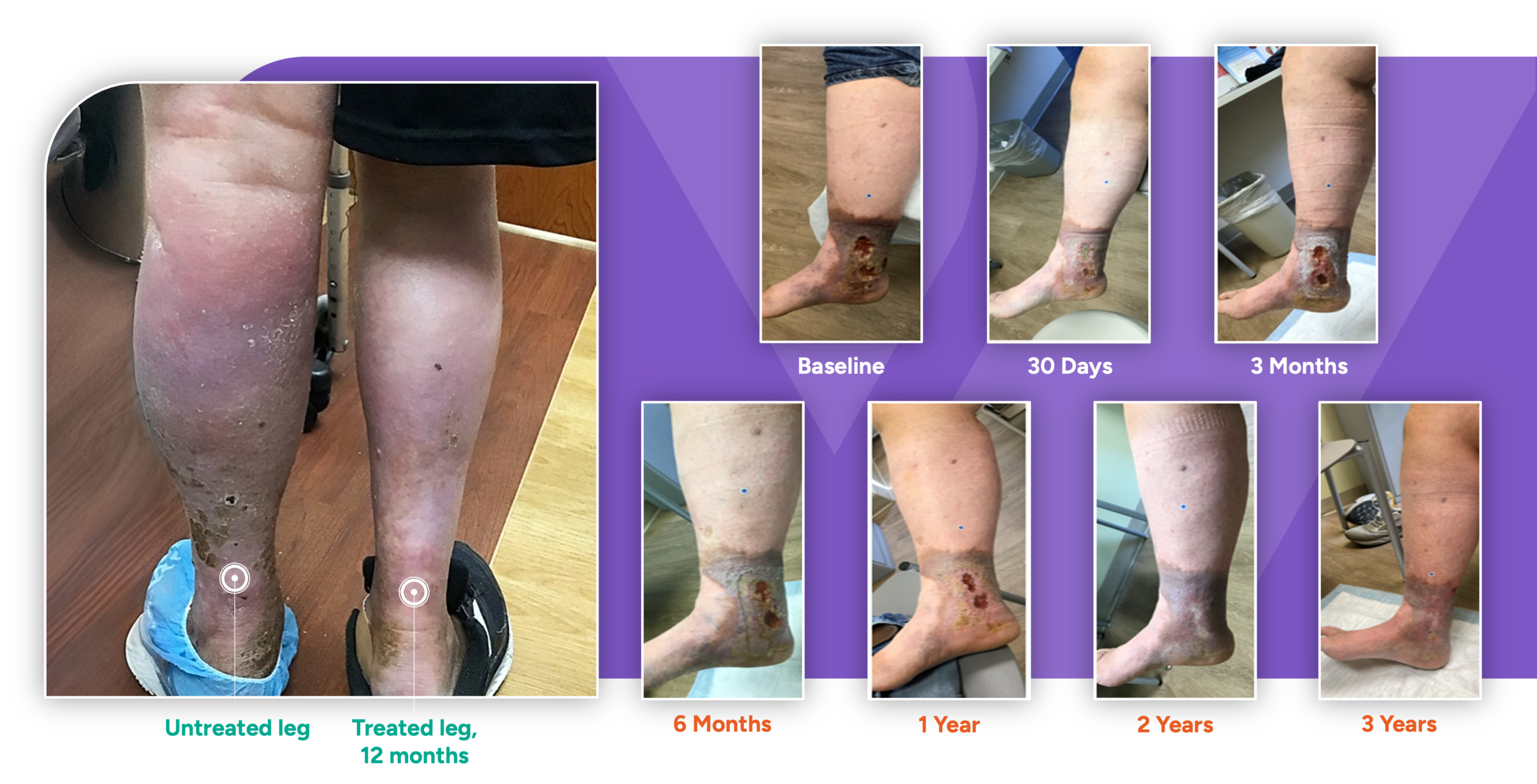
Ulcer Healing from First-Generation VenoValve SAVVE Trial Patients
Patients Treated